
When Presence Became Optional
read about the death of 'presence' in our insensitive life and busy days..
Mohammad Danish
4/15/20263 min read
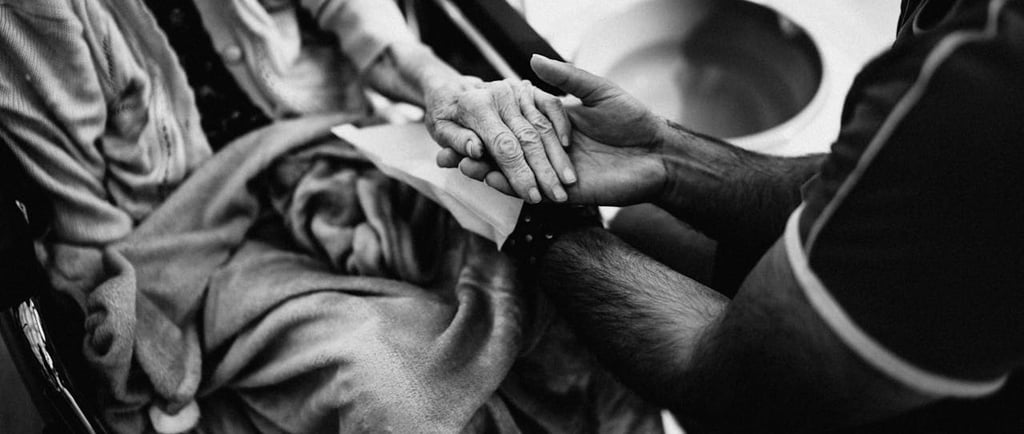
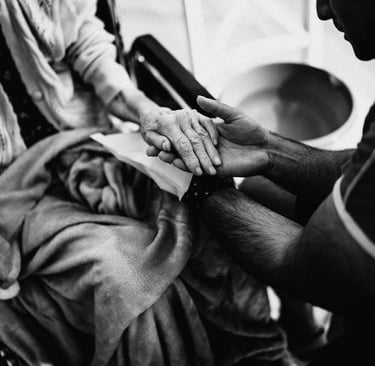
There are moments in life that do not announce themselves loudly, yet they reveal truths we often avoid confronting. A friend loses his mother after a prolonged illness. The inevitability of the loss does not soften its impact. He shares the news in a WhatsApp group. Messages of condolence appear—brief, polite, and distant. Two friends show up in person. The rest remain silent, or worse, digitally present but physically absent. In that quiet gap between messages and presence lies a deeper question: what has changed in the way we value relationships?
We live in a time where communication is effortless but connection is fragile. Technology has given us the illusion that reaching out is the same as showing up. A message typed in seconds feels like participation, but grief is not comforted by notifications. It is comforted by presence, by silence shared, by a hand on the shoulder, by the simple act of being there. Yet, somewhere along the way, we have started believing that convenience can replace commitment.
The most common justification is that life has become busy. Work demands more. Commutes are longer. Responsibilities are heavier. But this explanation does not fully hold. We are not too busy; we are selective about where we invest our time. We find hours for entertainment, for scrolling endlessly, for obligations that serve our personal or professional interests. What has quietly shifted is not the availability of time, but the value we assign to relationships. They are no longer obligations of the heart; they have become optional engagements.
In earlier times, relationships operated on an unspoken code of responsibility. When something significant happened—joy or sorrow—people showed up without needing to be asked. Presence was instinctive. A loss in one household echoed through the community. Friends and neighbors arrived, not because it was convenient, but because it was expected. More importantly, it was felt. No one evaluated whether their presence would “make a difference.” The act of being there was the difference.
Today, relationships are increasingly filtered through a lens of practicality. We unconsciously measure effort against perceived value. Will my presence matter? Is it worth the inconvenience? Do I really need to go? These questions, though subtle, reflect a deeper transformation. Relationships have begun to resemble transactions. We engage when there is mutual benefit, maintain contact when there is relevance, and withdraw when there is none. Loyalty, once unconditional, is now often conditional.
This shift is not always rooted in insensitivity. In many cases, it stems from discomfort. Showing up during grief requires emotional courage. It means stepping into a space where words often fail, where silence feels heavy, where we are confronted with vulnerability—both ours and someone else’s. It is easier to send a message than to sit beside someone who is hurting. It is easier to type “stay strong” than to witness what strength actually looks like in moments of loss.
Another factor is the dilution of depth. We know more people than ever before, yet truly connect with fewer. Social circles have expanded, but emotional circles have shrunk. The effort required to maintain deep relationships has been replaced by the ease of maintaining many shallow ones. In this environment, presence becomes rare, and rarity, over time, becomes optional.
What is often overlooked is how strong relationships are actually built. They are not formed in moments of celebration, where everything is easy and pleasant. They are forged in discomfort, in inconvenience, in moments where showing up requires effort. They are built when someone chooses to be present despite having reasons not to. These moments create a memory that cannot be replicated by words alone.
People may forget the exact messages they received during difficult times, but they rarely forget who stood beside them. Presence leaves an imprint that communication cannot. It transforms relationships from acquaintances into bonds, from connections into commitments.
The contrast between past and present is not merely nostalgic; it is instructive. It shows us that relationships once thrived not because people had more time, but because they placed higher value on being there for each other. Today, the challenge is not to reject modern life or its demands, but to consciously reclaim that value.
Rebuilding meaningful relationships does not require grand gestures. It begins with small, deliberate choices. Choosing to visit instead of just texting. Choosing to call instead of sending a message. Choosing to prioritize a person, even when it is inconvenient. These choices, though simple, signal something powerful—that the relationship matters beyond convenience.
Ultimately, relationships are sustained not by the frequency of interaction, but by the depth of presence. In moments of need, what matters is not how many messages arrive, but how many people show up. And showing up, despite everything that pulls us away, remains one of the most profound expressions of care.
Perhaps the real question is not whether people have become less serious about relationships, but whether we have slowly started treating them as optional. And if that is the case, then the responsibility to change it does not lie with everyone else. It begins with a single decision—to be there when it matters most.
Journey well taken
Sharing life insights on marketing and motorcycling adventures.
Connect
contact@danishspeaks.com
© 2025. All rights reserved.