
Exam Stress and the Lost Power of a Free Mind
Examining students are not bad but keeping them under examination continuously IS bad
Mohammad Danish
5/10/20265 min read
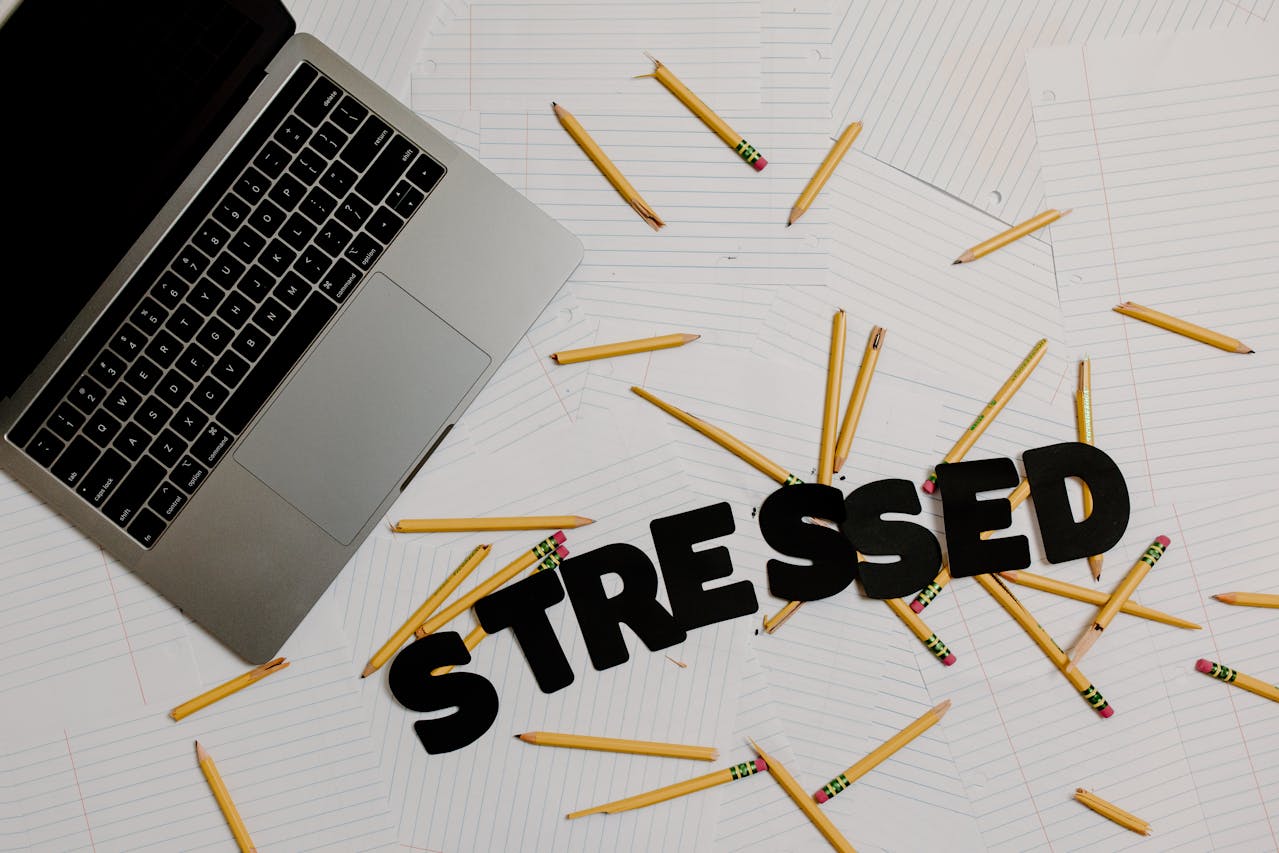
Exam stress is not the real enemy. In fact, a small amount of stress can be useful. It pushes students to revise, stay disciplined, and take responsibility for their learning. The problem begins when exams stop being a test of knowledge and become a test of identity. A report card then becomes a verdict. Marks become a child’s social value. Rank becomes family pride. And slowly, the student begins to believe a dangerous lie: my result is my worth.
This is where the schooling system deserves serious criticism. Many schools keep children so tightly occupied with classes, homework, tuition, worksheets, projects, tests, mock tests, and competitive comparisons that childhood itself becomes a productivity schedule. The child has almost no free mental space left to discover personal talent, ask strange questions, explore hobbies, get bored, observe life, or simply think. A student may be good at design, storytelling, machines, music, sport, negotiation, humour, empathy, leadership, or solving practical problems—but the system often has only one narrow measuring scale: marks.
This is not education in its fullest sense. This is conditioning.
A mark-driven system often produces compliant performers rather than independent thinkers. Students learn to reproduce accepted answers, not necessarily to create new ones. They learn to follow instructions, not always to question assumptions. They learn to fear mistakes, though mistakes are often the birthplace of innovation. Research on education has repeatedly warned that high-pressure standardized testing can narrow teaching, reduce attention to non-tested areas, and weaken creativity and individuality. One study discussing standardized testing notes that schools under performance pressure often ignore areas not tested, including co-curricular development, limiting the quality and breadth of education students receive. (ERIC)
The tragedy is that creativity does not usually grow in a permanently busy mind. Creativity needs empty space. It needs silence, boredom, play, wandering, and time without immediate performance pressure. Psychological research has found that boredom and mind-wandering can sometimes support creative thinking because the brain begins to search for novelty, connect unrelated ideas, and generate alternatives. A well-known study on boredom and creativity found that boring activities could increase performance on divergent thinking tasks—the kind of thinking where there is no single correct answer but many possible creative responses. (UCLan - University of Central Lancashire)
Mind-wandering, which many adults dismiss as laziness or distraction, also has a serious creative function. Research published in Current Opinion in Behavioral Sciences explains that mind-wandering involves self-generated thoughts and shares mental processes with creative thinking, including spontaneous idea generation followed by reflection and evaluation. (sciencedirect.com) Recent research has also examined how incubation breaks that allow the mind to wander can improve creative performance after a task, suggesting that stepping away from intense focus is not always wasted time—it may be part of the solution-building process. (Nature)
This matters deeply for students. A child staring out of the window may not always be wasting time. A child taking apart a toy may be understanding engineering. A child asking “why” repeatedly may be practicing philosophy or science. A child inventing imaginary games may be rehearsing leadership, negotiation, world-building, and problem-solving. Unstructured free play has been linked to important developmental benefits. The American Psychological Association notes that play not organized by adults helps children build resilience, develop creativity, and engage socially in organic ways. (APA) Harvard Medicine has also highlighted research showing that even small doses of recess and unstructured play can improve attention and help children absorb new knowledge. (Harvard Medicine Magazine)
Many disruptive solutions in history were born not from perfect compliance but from curiosity, frustration, and unconventional thinking. Steve Jobs famously dropped out of Reed College after one semester, yet continued auditing classes, including calligraphy—a seemingly impractical curiosity that later influenced Macintosh typography. (Reed College) Richard Branson struggled academically and has spoken openly about dyslexia, yet built the Virgin Group by thinking entrepreneurially rather than conventionally. (Dyslexia Association of London) Srinivasa Ramanujan had limited formal mathematical training, yet made groundbreaking contributions to number theory and mathematical analysis. (Ramanujan College) These examples do not mean education is useless. They mean marks are incomplete. They measure one kind of performance, not the full range of human potential.
Mahatma Gandhi’s academic performance in school was modest rather than extraordinary. He was not known as a brilliant or highly competitive student, but he was regular, disciplined, shy, obedient and sincere in his studies. In his own autobiography, Gandhi described himself as an average student and admitted that he did not have a very high opinion of his own academic ability. His known matriculation record also supports this: in the 1887 matriculation examination of Bombay University, he reportedly scored 247.5 marks out of 625, which comes to about 39.6%. Some reported subject-wise marks include English 89/200, Gujarati 45.5/100, Mathematics 59/175, and General Knowledge 54/150. These marks show that Gandhi was not academically exceptional in the conventional sense, yet his school life revealed qualities far more important than marks: truthfulness, discipline, punctuality and moral courage. One famous incident from his school days shows this clearly: during an inspection, his teacher prompted him to copy the spelling of a word from another student, but Gandhi refused because he believed copying was wrong. His early life therefore proves that ordinary marks do not define a person’s future greatness; Gandhi’s real strength was not academic brilliance, but character.
At the same time, brilliance without values can become dangerous. Ted Kaczynski, known as the Unabomber, was academically gifted and trained in mathematics, yet became one of America’s most notorious criminals. The FBI records his case as a major domestic terrorism investigation involving a long bombing campaign. (Federal Bureau of Investigation) His life is a grim reminder that intelligence alone is not greatness. Education must develop ethics, empathy, emotional balance, and social responsibility—not just sharp minds.
The real purpose of education should be to help children discover who they are, not merely where they rank. Exams should create discipline, not fear. Schools should create thinkers, not machines. A child needs study, but also boredom. A child needs structure, but also freedom. A child needs guidance, but also the right to explore.
Because the future will not be built only by those who scored the highest marks. It will be built by those who can see ordinary problems differently, imagine better answers, and dare to create what the textbook never asked.
WHY?
Read the Full Article
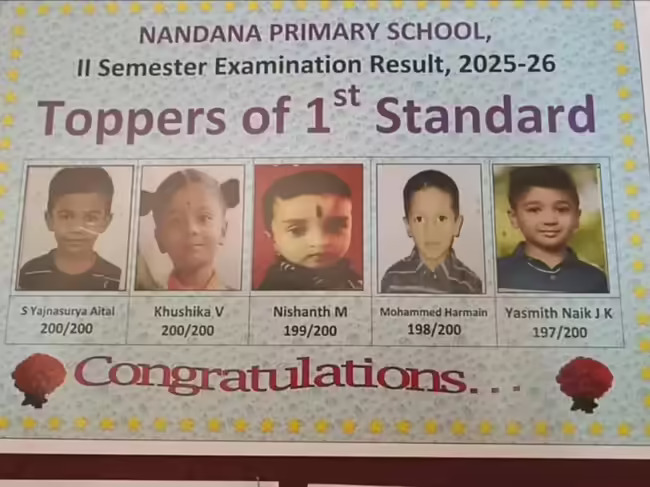
Must Watch, this is one of my favourite movies:
In Scent of a Woman, Al Pacino’s defence of Charlie Simms becomes a powerful reminder that an institution’s duty is not only to produce good marksheets, but to build character. Charlie risks his future by refusing to betray others, proving that integrity can matter more than academic success. Slade exposes the failure of a school that claims to create leaders but cannot recognize courage, loyalty and moral strength. The scene shows that great institutions are judged not just by grades and reputation, but by the values they protect when a student’s character is tested.

Journey well taken
Sharing life insights on marketing and motorcycling adventures.
Connect
contact@danishspeaks.com
© 2025. All rights reserved.