
Charm Pricing
Charm pricing—using amounts like $9.99 instead of $10—plays on psychological perception to make products feel cheaper and encourage purchases. While it can boost sales, overuse risks customer confusion, reduced trust, and lower margins. This blog explores its history, effectiveness, drawbacks, and the fine balance brands must maintain when using it.
Mohammad Danish
7/12/20243 min read
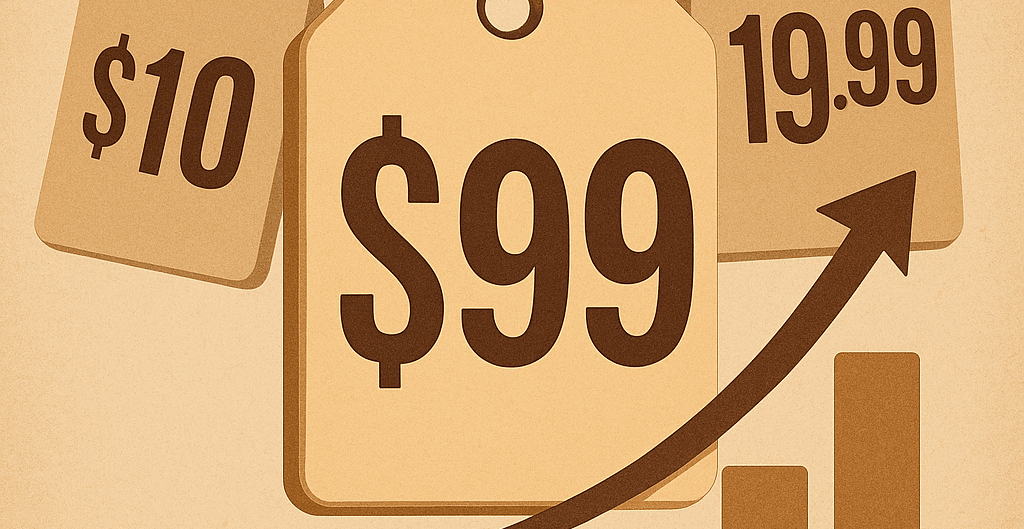

Charm pricing is also known as psychological pricing and is a strategy that has been used for centuries by businesses to increase sales. The idea behind charm pricing is that certain prices are more appealing to customers than others, and this can encourage them to make a purchase. For example, $9.99 is often seen as being more affordable than $10, even though the difference is only one cent. This type of pricing can be effective in getting people to buy items that they may not have otherwise considered.
While charm pricing can be an effective way to increase sales, it's important to use it sparingly and only when it makes sense for the product or service being offered. If prices are too low, it can give customers the impression that the quality of the product is also low.
It's unclear exactly where charm pricing originated, but it's thought to have started in the early days of retail when store owners would price items at odd prices (such as $0.98 or $1.37) in order to make them seem like a bargain. While there's no hard evidence that charm pricing actually works, many retailers continue to use it because it's an easy way to make products appear less expensive than they actually are. Charm pricing is a marketing technique that involves pricing products or services at $9.99 or $19.99 instead of at round numbers like $10 or $20. The theory behind charm pricing is that consumers are more likely to perceive the product as being less expensive than it actually is, and therefore more likely to purchase it.
Pricing is a key component of marketing, where pricing strategy must take into account both the demand for the product and the perception of the brand. Pricing strategies are used to bring about an efficient allocation of resources, by setting prices that reflect each products' value.
While some research has shown that charm pricing can be effective in increasing sales, other studies have found that it can also lead to consumer confusion and resentment.
Read an interesting article here : https://www.fastcompany.com/1826172/psychology-behind-sweet-spots-pricing
Many people view charm pricing as a way to get more customers through the door. However, there are some drawbacks to this type of pricing. First, it can be confusing for customers. They may see a price that ends in .99 and think it is the regular price, when in reality it is the sale price. This can lead to frustration and anger if they feel like they've been tricked. Additionally, charm pricing can backfire if done too frequently. Customers may begin to expect that every item is discounted and become less likely to make a purchase unless they see a sale price. Finally, charm pricing can eat into profits if not done carefully. If an item is regularly priced at $9.99 and then discounted to $5.99, the store is only making $4 profit per item sold. While there is some evidence that charm pricing can be effective, it is not always clear whether the benefits outweigh the costs.
Also, it can be perceived as dishonest or manipulative, which could damage your brand's reputation. If your competitors are not using charm pricing, your prices may look out of line and discourage customers from doing business with you. Finally, constantly changing your prices can be confusing for customers and make it difficult for them to compare products and values. On the other hand, there are also some definite advantages to using charm pricing. Charm pricing exploit's the consumer's aversion to losing money, and has been shown to increase sales by as much as 25%. Though it is a highly effective marketing tool, charm pricing can also be perceived as dishonest and misleading, so businesses should use it sparingly and with caution.
Journey well taken
Sharing life insights on marketing and motorcycling adventures.
Connect
contact@danishspeaks.com
© 2025. All rights reserved.